

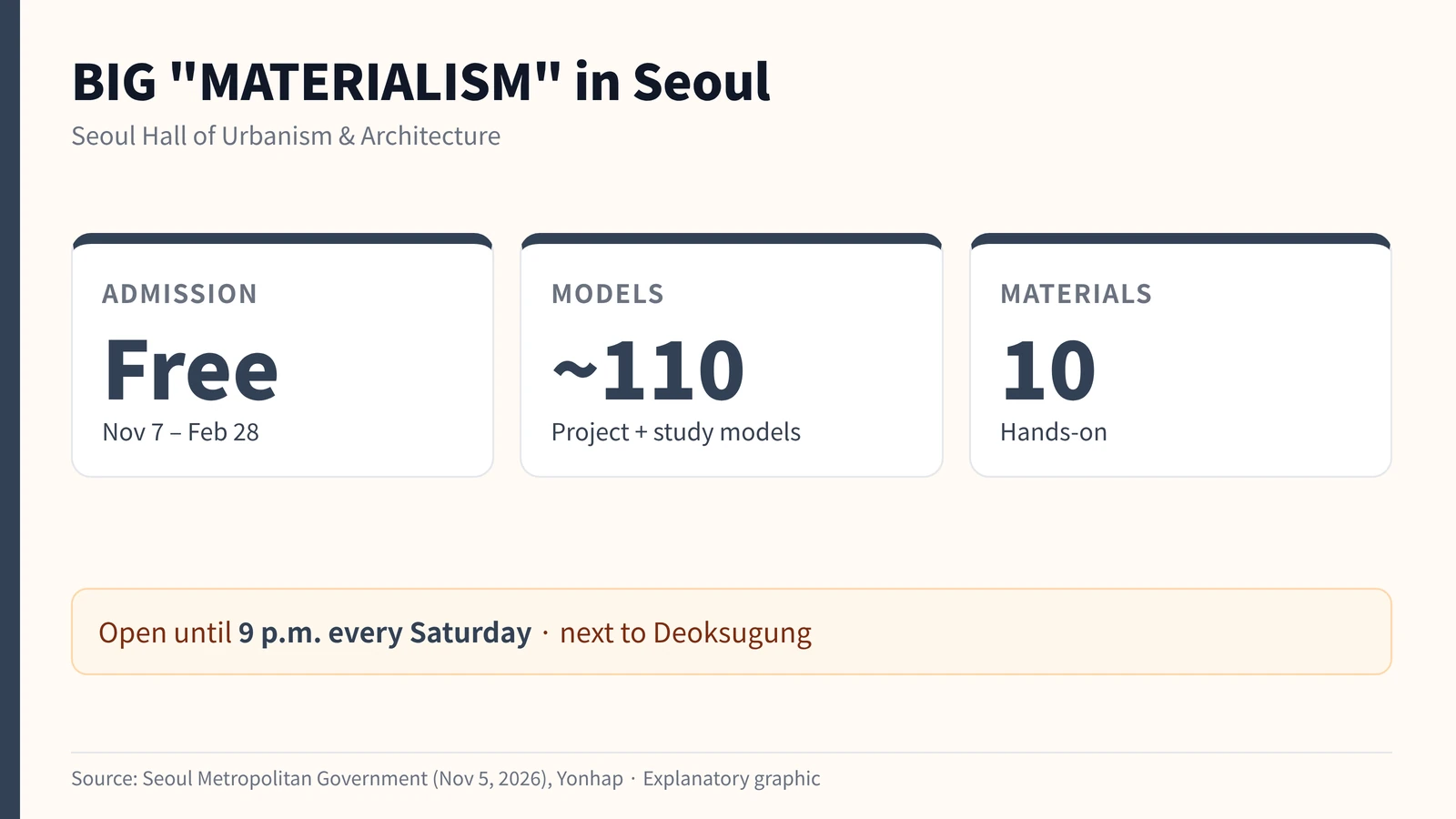
BIG (Bjarke Ingels Group), the Danish-founded studio behind Copenhagen’s ski-slope power plant, is holding its first exhibition in Korea, “MATERIALISM,” at the Seoul Hall of Urbanism & Architecture next to Deoksugung Palace. It runs November 7, 2026 to February 28, 2027, admission is free, and the hall stays open until 9 p.m. every Saturday. About 110 models and ten building materials fill two basement floors, and you can touch the materials and sit on chairs made from them.
Updated November 10, 2026. Based on the Seoul Metropolitan Government’s announcement (Nov 5, 2026) and reports by Yonhap, Kyunghyang Shinmun and The Herald Business.
What MATERIALISM is
BIG was founded by Danish architect Bjarke Ingels. The studio is known for Amager Bakke (CopenHill) in Copenhagen, a waste-to-energy plant with a ski slope and park on its roof, and VIA 57 West, a pyramid-shaped residential tower in Manhattan. Seoul says this is the studio’s first planned exhibition in Korea.
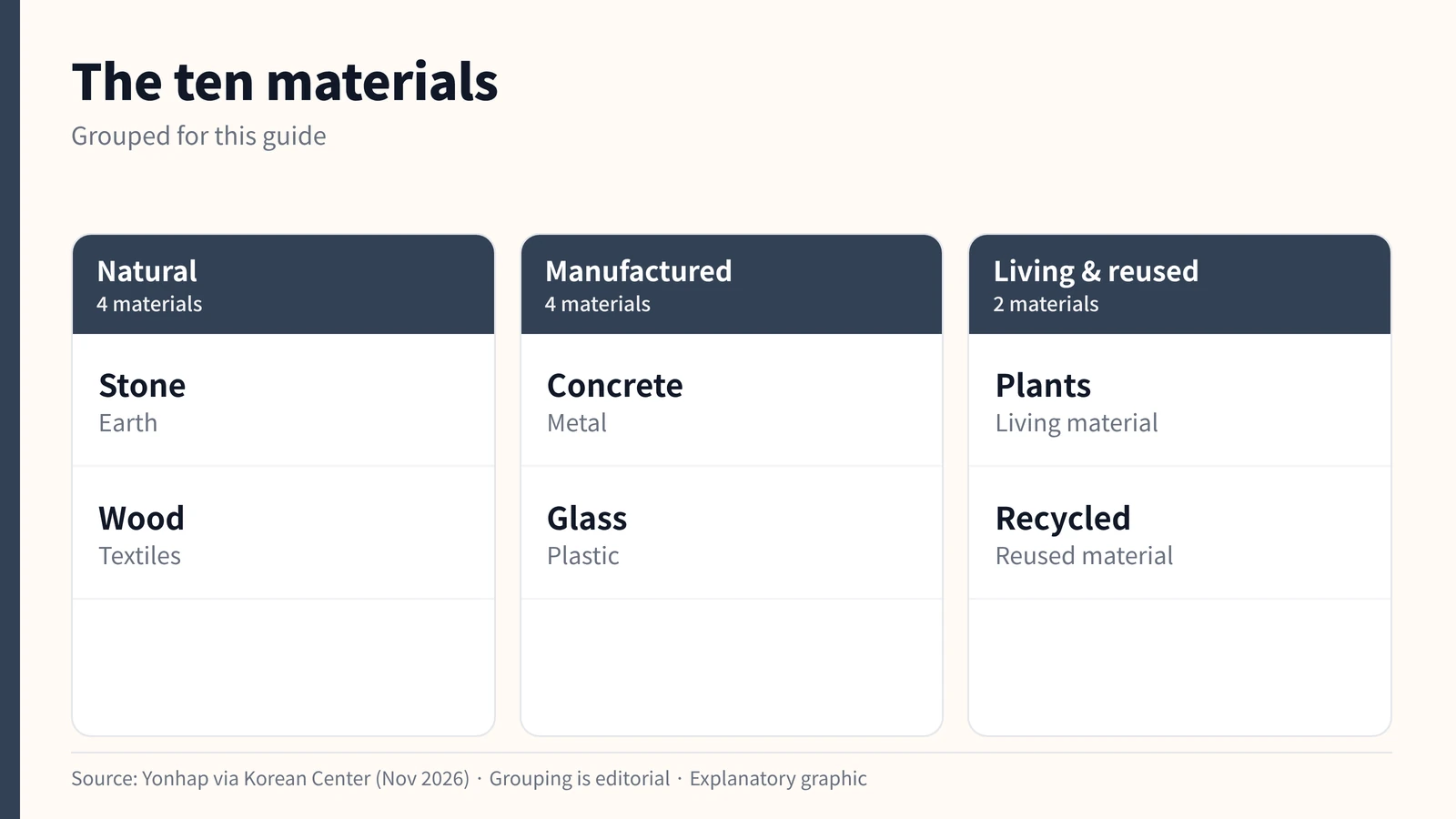
The show is organized around ten materials: stone, earth, concrete, metal, glass, wood, textiles, plastic, plants and recycled materials. Each is used to explain how BIG turns an idea into a building. On the third basement floor there are about 50 models of major projects, along with photographs and drawings, and about 60 study models made while ideas were being developed.
| Item | Details |
|---|---|
| Venue | Seoul Hall of Urbanism & Architecture, B2 and B3, 119 Sejong-daero, Jung-gu (next to Deoksugung) |
| Dates | Nov 7, 2026 – Feb 28, 2027 |
| Hours | 10:00–18:00; Saturdays until 21:00 |
| Admission | Free |
| Models | About 110 (about 50 project models + about 60 study models) |
| Hands-on | Touch the ten materials; sit on chairs made from them |
| Guided tours | Docent program throughout the exhibition |
The ten materials
On the way from the Bium Hall to Gallery 2, visitors read texts by Bjarke Ingels on how he thinks about each of the ten materials. The point of the show is that materials are not just finishes; they shape what a building can be.
| Natural | Manufactured | Living and reused |
|---|---|---|
| Stone | Concrete | Plants |
| Earth | Metal | Recycled materials |
| Wood | Glass | |
| Textiles | Plastic |
Bjarke Ingels’ idea: utopian pragmatism
In Seoul, Ingels described BIG’s approach as “utopian pragmatism,” Seoul Shinmun reported: practical buildings that also add something unexpected for the people who use them. CopenHill is his standard example, a waste-to-energy plant that most cities would hide, turned into a public ski slope and park. He also praised what he called Korea’s innovative energy. Seoul Mayor Oh Se-hoon toured the exhibition with Ingels on November 5.
The exhibition is hosted by the Seoul Metropolitan Government and organized by BIG with Maker and Wayd. Seoul’s future-space planning official said the city hopes that people who are not familiar with architecture will touch the materials, look at the models and see their city and its spaces in a new way.
| Project | City | Known for |
|---|---|---|
| Amager Bakke (CopenHill) | Copenhagen | Ski slope and park on a power plant roof |
| VIA 57 West | New York | Pyramid-shaped residential tower |
Talks and tours
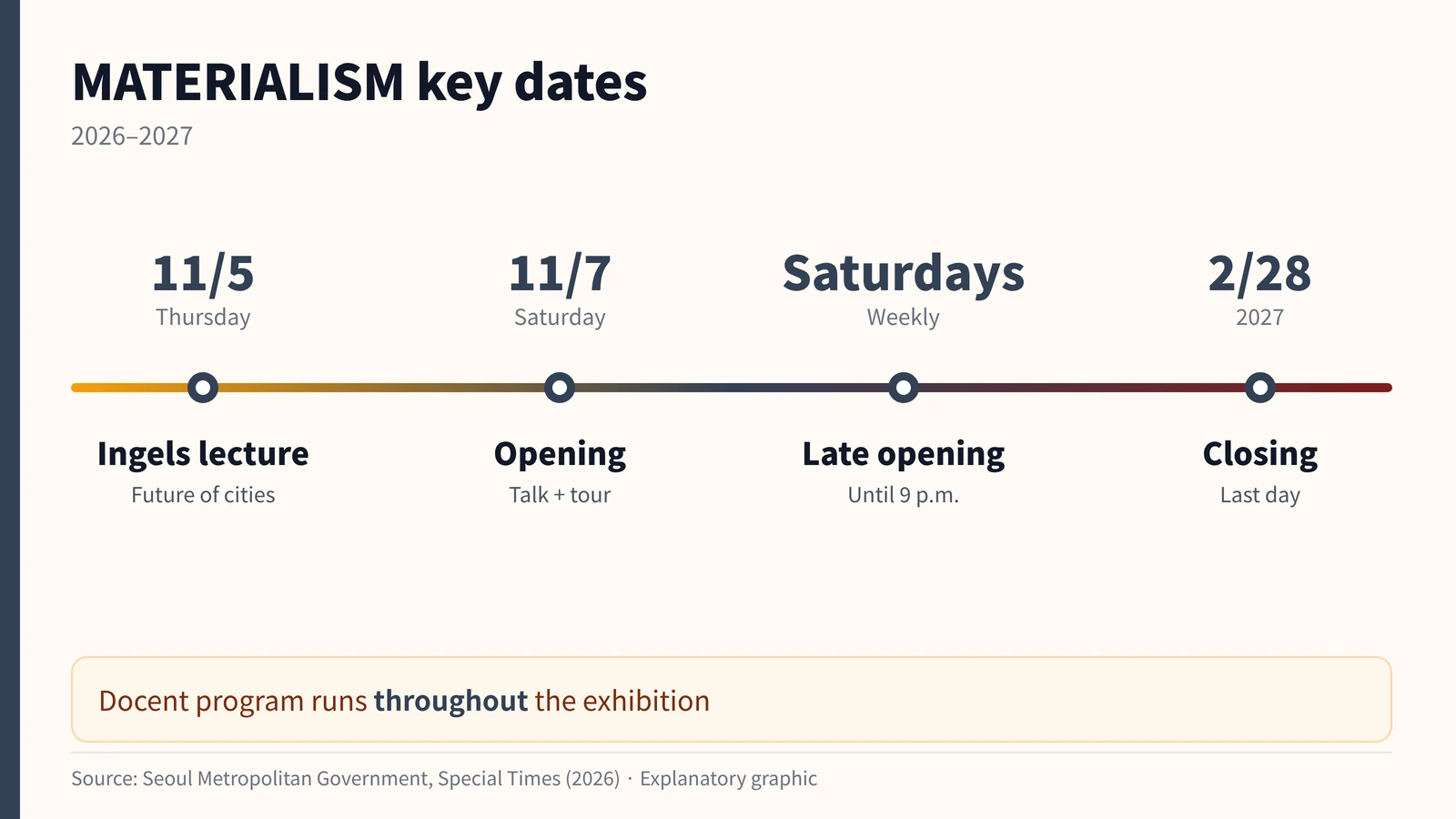
Bjarke Ingels gave a special lecture on the future of urban architecture on November 5, and on opening day a Korean architect from BIG gave a talk and gallery tour. Throughout the exhibition, docents explain how the materials, models and finished buildings connect, which helps if architecture is not your field.
The hall stays open until 9 p.m. on Saturdays, so you can combine the exhibition with an evening walk along the Deoksugung stone-wall road.
Getting there and what is nearby
The Seoul Hall of Urbanism & Architecture sits beside Deoksugung Palace on Sejong-daero, across from Seoul Plaza and City Hall. City Hall Station (Lines 1 and 2) is the closest subway stop.
| Nearby | Why combine it |
|---|---|
| Deoksugung Palace | Next door; mix of traditional and Western-style buildings |
| Seoul Plaza | Directly across the road |
| Seoul Museum of Art (Seosomun) | Short walk; open until 9 p.m. on Fridays through December |
FAQ
When is the BIG exhibition in Seoul?
November 7, 2026 to February 28, 2027.
Where is it?
Seoul Hall of Urbanism & Architecture, 119 Sejong-daero, next to Deoksugung Palace.
Is it free?
Yes.
What are the hours?
10 a.m. to 6 p.m., and until 9 p.m. on Saturdays.
Can I touch anything?
Yes. The ten materials are hands-on, and you can sit on chairs made from them.
Is there a guided tour?
A docent program runs throughout the exhibition.
Who is Bjarke Ingels?
The Danish architect who founded BIG, known for CopenHill in Copenhagen and VIA 57 West in New York.
Sources
- Seoul Metropolitan Government: BIG’s first exhibition in Korea opens Nov 7 (Nov 5, 2026, Korean)
- Seoul news portal: BIG MATERIALISM exhibition (Korean)
- Korean Center / Yonhap: 110 models, ten materials, Saturdays to 9 p.m. (Korean)
- Kyunghyang Shinmun: BIG holds first Korea exhibition (Nov 5, 2026, Korean)
- Special Times / KTO listing: venue address, hours and free admission (Korean)
- Seoul news portal: Byeolbam Seoul, Seoul Museum of Art Friday nights (Korean)
- Seoul Shinmun: Ingels on utopian pragmatism (Nov 6, 2026, Korean)
- The Herald Business: Mayor Oh tours the exhibition with Ingels (Nov 6, 2026, Korean)
Sources checked November 10, 2026.