
Most freelancers set their first rate by guessing, then spend years underpriced because they never revisit the number. Pricing isn’t just “hours times a rate” — it’s a decision that affects who you attract as clients, how sustainable your business is, and whether you’re compensated for everything the work actually costs you.
Why Hourly Rate Alone Backfires
An hourly rate quietly punishes you for getting faster. The more experienced you become, the less time a task takes — which means your income can shrink even as your skill grows, unless the rate keeps climbing to compensate. It also caps your income at the number of hours in a day, regardless of how much value the work delivers to the client.
Three Common Pricing Models
| Model | How It Works | Best For |
|---|---|---|
| Hourly | Fixed rate × hours worked | Undefined-scope or ongoing support work |
| Project-based | Flat fee for a defined deliverable | Clear-scope projects with a fixed end point |
| Value-based | Priced on the outcome’s worth to the client, not your time | Work with measurable business impact (e.g. a landing page tied to sales) |
How to Calculate Your Baseline Rate
Even if you plan to price by project or value eventually, you need a baseline hourly figure to sanity-check every quote against. Here’s the process:
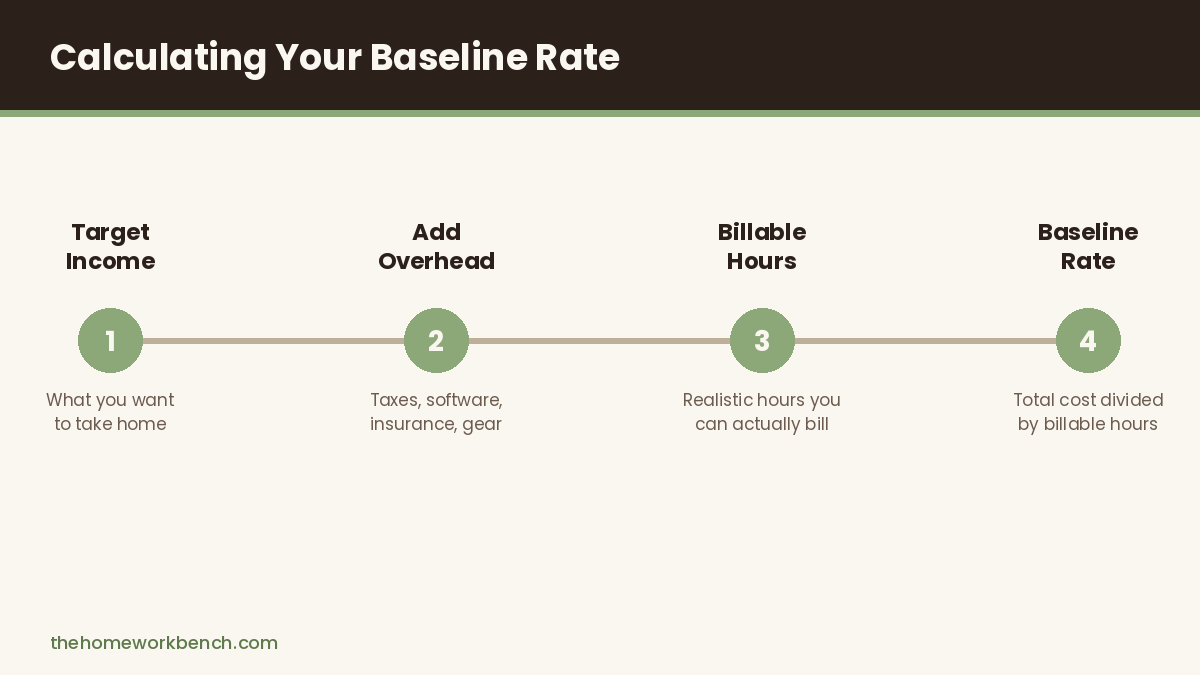
Four-step process for calculating a baseline freelance rate: target income, add overhead, divide by billable hours, get baseline rate
The key step people skip is billable hours — the realistic number of hours you can actually bill in a week, not the number of hours you work. Admin, proposals, client calls, and marketing are real time that doesn’t get billed, so a 40-hour week might only convert to 25-28 billable hours.
Raising Rates Without Losing Clients
Once you have a baseline, the number isn’t fixed forever. Rates should rise as your skill, portfolio, and demand grow — but how you raise them affects whether clients stay.
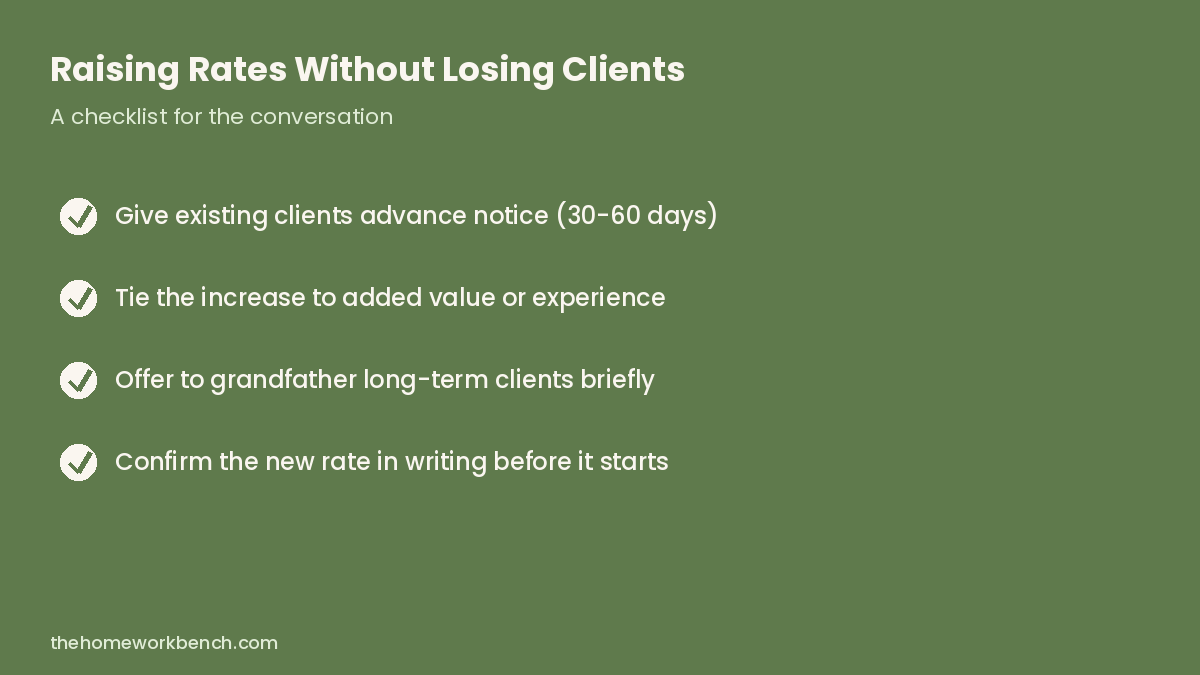
Checklist for raising freelance rates without losing clients: give advance notice, tie increase to value, offer to grandfather long-term clients, confirm in writing
Common Pricing Mistakes
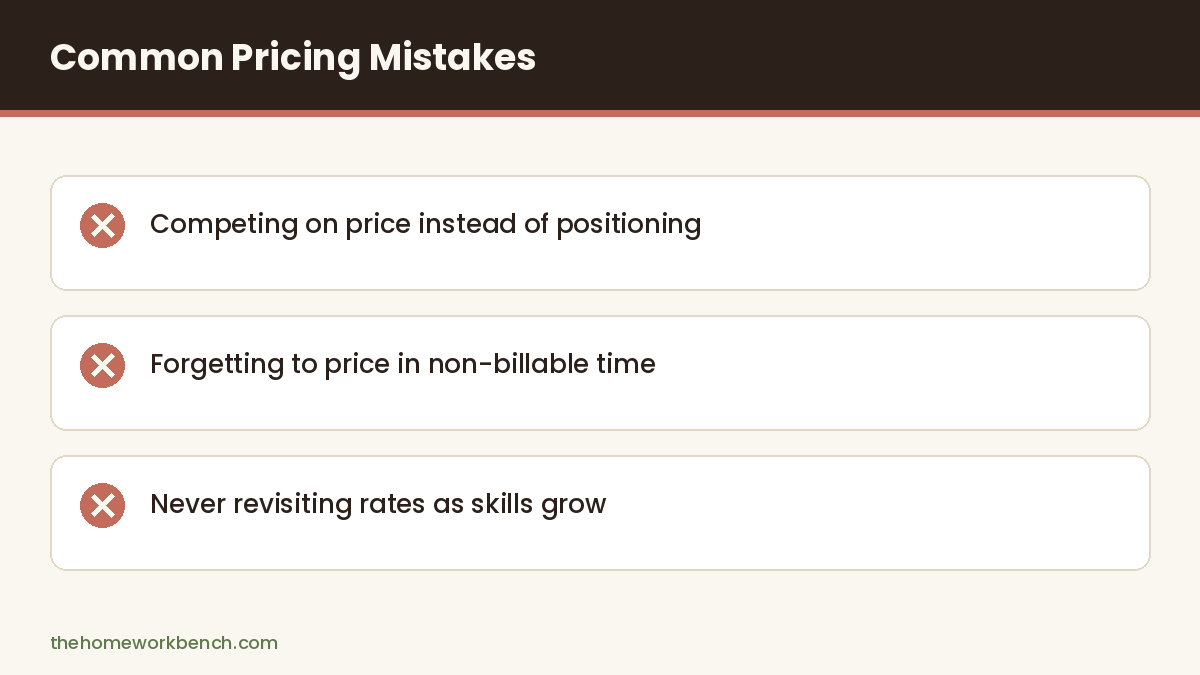
Three common freelance pricing mistakes: competing on price instead of positioning, forgetting non-billable time, never revisiting rates
Bottom Line
Your rate isn’t just a number you pick once — it’s a calculation that should account for your real costs, your real billable time, and it should move as your skills do. Freelancers who revisit their pricing regularly, rather than freezing it at whatever number they started with, are the ones whose income actually grows alongside their experience.